
Table of Contents
Starting an online business often feels exciting—until reality hits. You think about inventory, storage, shipping, customer complaints, and the money you might lose if things go wrong. If you’ve ever paused your entrepreneurial dream because of these fears, you’re not alone. This is exactly why many beginners search for a clear answer to one question: what is dropshipping, and is it really worth it?
Dropshipping has become one of the most talked-about online business models because it removes many traditional barriers. You don’t need a warehouse. You don’t need to buy products upfront. And you don’t need years of experience to get started. But to succeed, you need to understand how it truly works—without hype or unrealistic promises.
This guide gives you a complete, beginner-friendly explanation of what is dropshipping, how it works step by step, its pros and cons, costs, legality, and whether it fits your goals.
What Is Dropshipping? (Simple Definition for Beginners)
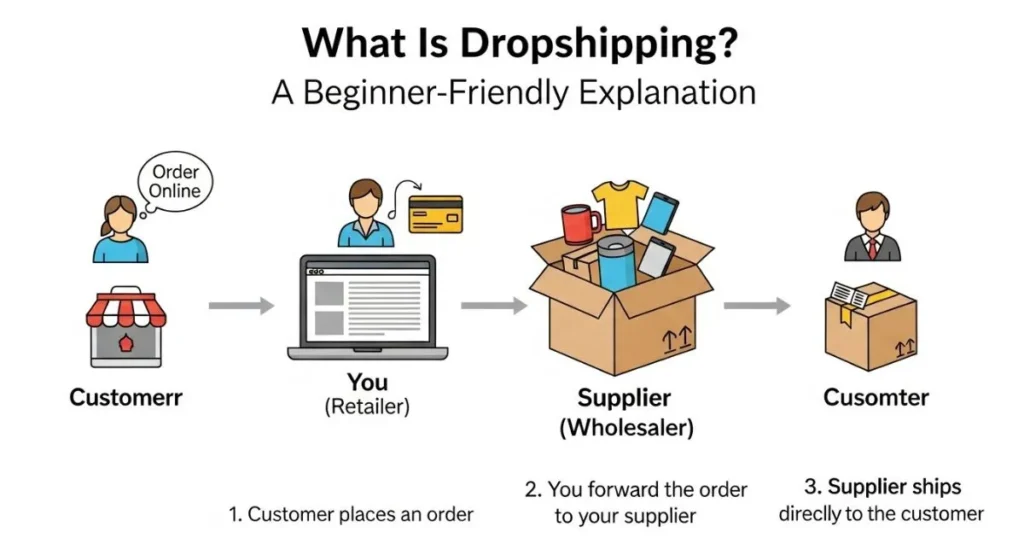
At its core, dropshipping is a way to sell products online without holding inventory. Instead of stocking items yourself, you partner with a supplier who stores, packs, and ships products directly to your customer.
What Is Dropshipping in Simple Terms?
Think of dropshipping like this:
- You create an online store
- A customer buys a product from you
- You forward the order to your supplier
- The supplier ships the product to the customer
- You keep the profit
You never touch the product, yet you control the brand, the pricing, and the customer experience.
This model is especially appealing if you want to start small, test ideas quickly, or build an online income stream without major financial risk.
How Does Dropshipping Work Step by Step?
Understanding the process removes confusion and helps you see whether dropshipping matches your expectations.
The Dropshipping Process Explained
- Choose a niche
You decide what type of products you want to sell (for example: fitness gear, home decor, pet accessories). - Find products to sell
You select items from suppliers that allow dropshipping. - Build your online store
This can be done using platforms like Shopify, WooCommerce, or similar tools. - Market your products
You drive traffic using ads, SEO, social media, or content marketing. - Customer places an order
The customer pays you the retail price. - You place the order with the supplier
You pay the wholesale price. - Supplier ships the product
The product is delivered directly to your customer. - You earn the difference
Your profit is the gap between selling price and supplier cost.
This simple flow is the reason many beginners are drawn to dropshipping.
What Is a Dropshipper and What Do You Actually Do?
A common misunderstanding is that dropshipping is “passive.” In reality, as a dropshipper, you are the business owner, and your role is essential.
Your Daily Responsibilities as a Dropshipper
- Researching profitable products
- Writing clear, persuasive product descriptions
- Setting competitive prices
- Running and optimizing ads
- Handling customer questions and refunds
- Monitoring suppliers and shipping times
While you don’t manage inventory, you do manage everything that affects sales and customer trust.
Is Dropshipping Legal and Legitimate?
One of the most searched questions is whether dropshipping is even allowed.
Is Dropshipping Legal?
Yes, dropshipping is legal in most countries. It’s simply a fulfillment method—not a loophole or a scam.
However, legality depends on how you run your business.
What Makes a Dropshipping Business Legit?
To stay compliant and trustworthy, you should:
- Register your business if required in your country
- Sell products that meet safety and quality standards
- Avoid misleading product claims
- Provide clear shipping and refund policies
- Respect intellectual property (no fake brands)
When done correctly, dropshipping is no different from any other online retail business.
Pros and Cons of Dropshipping for Beginners
Before you start, it’s important to look at both sides honestly.
Advantages of Dropshipping
- Low startup cost – You don’t buy inventory upfront
- Minimal risk – You only pay for products after you sell them
- Location flexibility – You can run your store from anywhere
- Easy to test products – You can add or remove products quickly
- Scalable model – Suppliers handle fulfillment as orders grow
These benefits make dropshipping attractive for beginners and side hustlers.
Disadvantages of Dropshipping
- Lower profit margins compared to private inventory
- Less control over shipping speed
- Supplier issues can affect your reputation
- High competition in popular niches
- Customer service responsibility still falls on you
Knowing these challenges helps you prepare instead of getting discouraged later.
Dropshipping Costs Explained (Beginner Cost Breakdown)
Many beginners ask how much money they actually need to start.
How Much Does It Cost to Start Dropshipping?
While dropshipping is low-cost compared to traditional retail, it’s not free.
Basic Dropshipping Cost Table
| Expense | Estimated Cost |
|---|---|
| Domain name | $10–$15 per year |
| Store platform | $25–$40 per month |
| Apps & tools | $20–$60 per month |
| Marketing & ads | $100–$500 (flexible) |
| Product samples | Optional |
Your biggest variable cost is marketing. The more efficiently you advertise, the better your margins.
Common Dropshipping Myths You Should Ignore
Dropshipping is surrounded by unrealistic claims. Let’s clear them up.
Myth vs Reality
| Myth | Reality |
|---|---|
| Dropshipping is instant money | It requires learning and testing |
| You don’t need skills | Marketing and communication matter |
| Any product will sell | Product research is critical |
| Success happens overnight | Growth takes time |
When you approach dropshipping as a real business, your chances of success increase dramatically.
Who Is Dropshipping Best For?
Dropshipping isn’t for everyone, but it works well for certain people.
Dropshipping Is a Good Fit If You:
- Want to start with limited capital
- Prefer flexibility over physical inventory
- Enjoy marketing, testing, and optimization
- Are willing to learn from failures
- Want an online business you can scale
If you’re looking for “easy money,” dropshipping may disappoint you. If you’re looking for a flexible business model, it can be powerful.
Frequently Asked Questions About What Is Dropshipping
What is dropshipping and how does it work for beginners?
Dropshipping is an online selling method where you don’t keep products in stock. You sell items through your store, and a supplier ships them directly to your customer after a purchase.
Is dropshipping profitable today?
Yes, dropshipping can still be profitable if you focus on smart product selection, clear branding, and effective marketing. Profitability depends more on execution than on the model itself.
What is dropshipping without inventory?
It means you don’t buy or store products upfront. Inventory management and shipping are handled by your supplier.
Can you start dropshipping with no experience?
Yes. Many successful dropshippers started with no background. Learning basic marketing, customer service, and product research is enough to begin.
Conclusion: Is Dropshipping Worth It for You?
Now that you fully understand what is dropshipping, you can see it for what it truly is: not a shortcut, but a flexible business model with low entry barriers.
If you’re willing to learn, test, and improve, dropshipping gives you a chance to build an online business without massive risk. You don’t need perfection—you need consistency, curiosity, and patience.
Your Next Step
If you’re serious about starting:
- Research one niche deeply
- Build a simple store
- Test one product
- Learn from the results
The best time to start isn’t “someday.” It’s when you understand the model—and now, you do.
Take action, start small, and grow smart.




4 Comments